tissue flowers/loving weeds
Saturday morning poems ++

If you’re new here, welcome. If not, welcome back! We’ve (that is the royal ‘we,’ there is only me to be sure—if you’re sure, I’m sure) got two fresh poems for you this week and a small reading list with thoughts on what is digesting at the moment. I’ll also be throwing you some thoughts on the work I’ve chosen for the featured illustrative accompaniments.
There are hyperlinks for you to follow should you like to explore further. Anything underlined is your ticket.
Please enjoy.
tissue flowers by M. I. Kast
I fear I have need
of too many tissues
than all the trees can hatch,
with as many tears
as blades of grass
with morning dew attached.

And should I run out,
may the tears spill down,
thanking the ground
that lies still beside her.
Because in the morning,
I will be mourning

every tissue that would be a flower.
loving weeds by M. I. Kast
My baby says I smell like
outside.
The thing that air and water feeds
and the sun shines on marsh-
tinged silver locks you like
to unravel with your fingers
in the mud and brine.

My baby smells like vapour.
The droplets of dew that leave
evidence of night free enough
to exhale
on pale yellow buttercups
and electric violet weeds that bloom
at dawn and die at dusk.
+ Digest
Spores of Doom, edited by Aaron Worth, Tales of the Weird Collection from the British Library (I picked up my copy at E. Shaver Booksellers)
I have looked at this book so consistently over the past two weeks that I didn’t need to second guess the citation. I have, also, put most everything else down. I do not do that often. I will reiterate that this style of anthology series is built specifically for the specific-oriented. This is a horror/sci-fi/speculative collection of works that focus on mushrooms. Those tiny little spongy gods at the feet of us mammals. I’ve read them, sat with them and dug my heels into their various soils and viscera. I’ve found authors I want to explore more, rounded out opinions of authors I’ve read, and even been utterly terrified and joyous in my feelings of disgust and surprise. Standouts include: H.G. Wells’ The Purple Pileaus, E. F. Benson’s How Fear Departed from the Long Gallery, Clark Ashton Smith’s The Vaults of Yoh Vombis, and William Hope Hodgson’s The Voice in the Night. And because I’ve sat with them for such a time without much distraction, here are a few choice thoughts on my standouts.
The Purple Pilaeus ←click to read
Mr. Wells’ managed something I thought, frankly, impossible for him. Given his history within the eugenics movement and support for “involuntary euthanasia,” it is difficult to imagine he would write a story with such an eye on the oppressor. It centers the experience of Mr. Coombes, but through it manages to illuminate the negative space of invisible labors that surround women and what awaits them when they don’t comply. He, also, allegedly, recanted his original thoughts and takes on eugenics and “involuntary euthanasia” (what a wild phrase for homicide/murder) by the 1940s, towards the end of his life after witnessing the atrocities committed by the Nazis. We cannot know for sure, but I can perhaps be swayed to believe it when I read this story and consider the ecology of his life. It is also true that its existence proves that no man alive has the excuse of “it was a different time” and that the worst among us often already know it’s wrong.
How Fear Departed from the Long Gallery ←click to read
My heart raced as I read this and its ending cradles you in a Christmas miracle. It is likely one of my favorite new finds. If it weren’t so scary, I’d read it aloud to children. On the other hand, I was read some pretty scary stories. Hmm. E. F. Benson, I will have a talk with you at some point, later. I’ll see you at the dirt nap.
The Vaults of Yoh-Vombis ←click to read
Confession time: I struggle with sci-fi. More specifically, I struggle with deeply masculine-coded sci-fi. Its bleakness does not appeal to me because no one else among us has the kind of time to brood on faraway landscapes not yet conquered, imagine conquering them, then writing their demise like a scribe. Dry, existential, and more than occasionally disappointingly non-descriptive. It’s not that it’s too concise or too droning, it just feels like it’s missing something. It’s more that someone might fail to ask follow-up questions to particularly juicy pieces of gossip from the work-chat that one may bring up at home and now your wife is annoyed that you don’t have more of the picture. You can always tell someone who doesn’t ask follow-up questions. Clark Ashton Smith asked follow-up questions, was a poet, and I think accomplished what H. P. Lovecraft wanted to accomplish with much more nuance and attention to phrasing (shade intended). I have never, ever, cared for a Martian story. This one changed my mind. It’s beautiful, brutal, and breathtakingly disturbing.
The Voice in the Night ←click to read
Mr. Hodgson created something here that I’ve never thought of and I am decidedly unmedicated. I am also mad about it. It’s a simple story, quiet even. These are the waters were devastation lives. Truly vile, gorgeous devastation. I will be undoubtedly reading more of his work in the coming months, years, possibly millennia if I can manage to appease the mushrooms.
++ Accompaniment
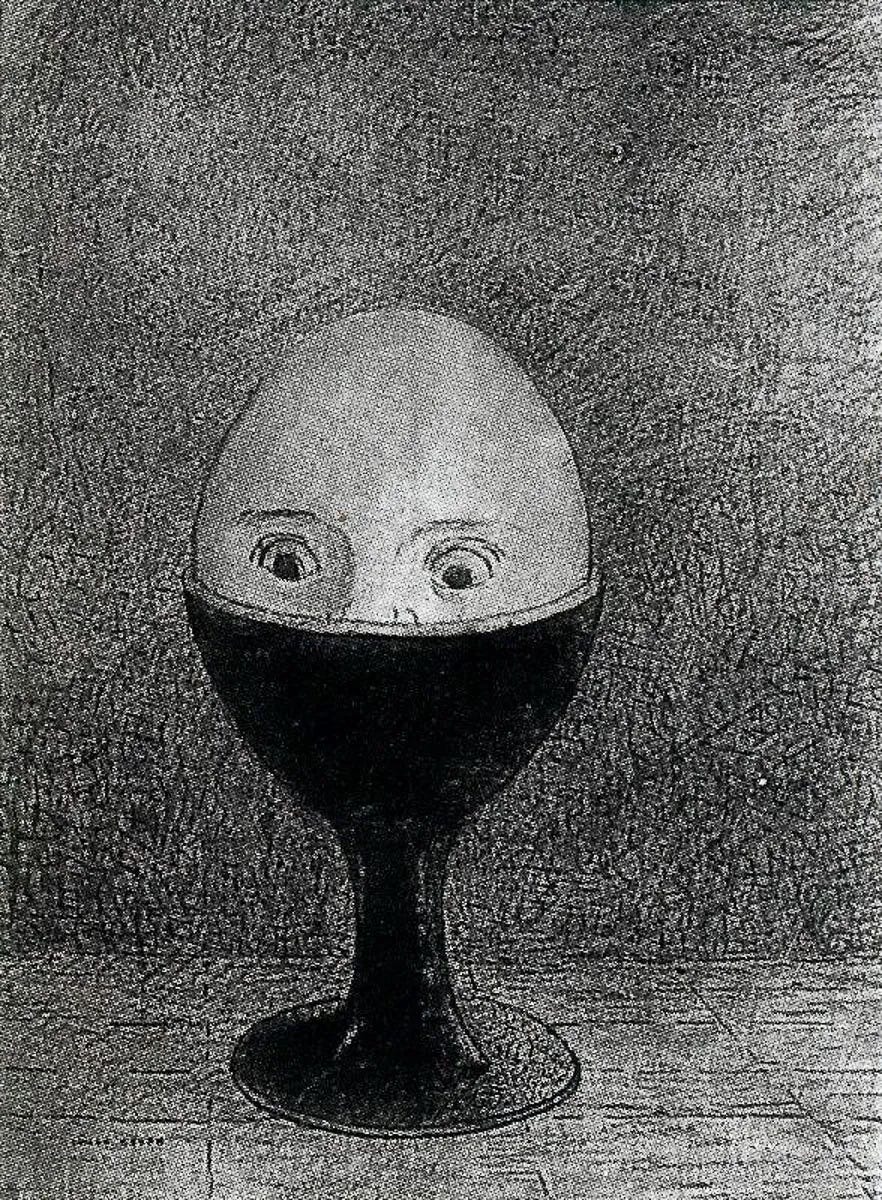
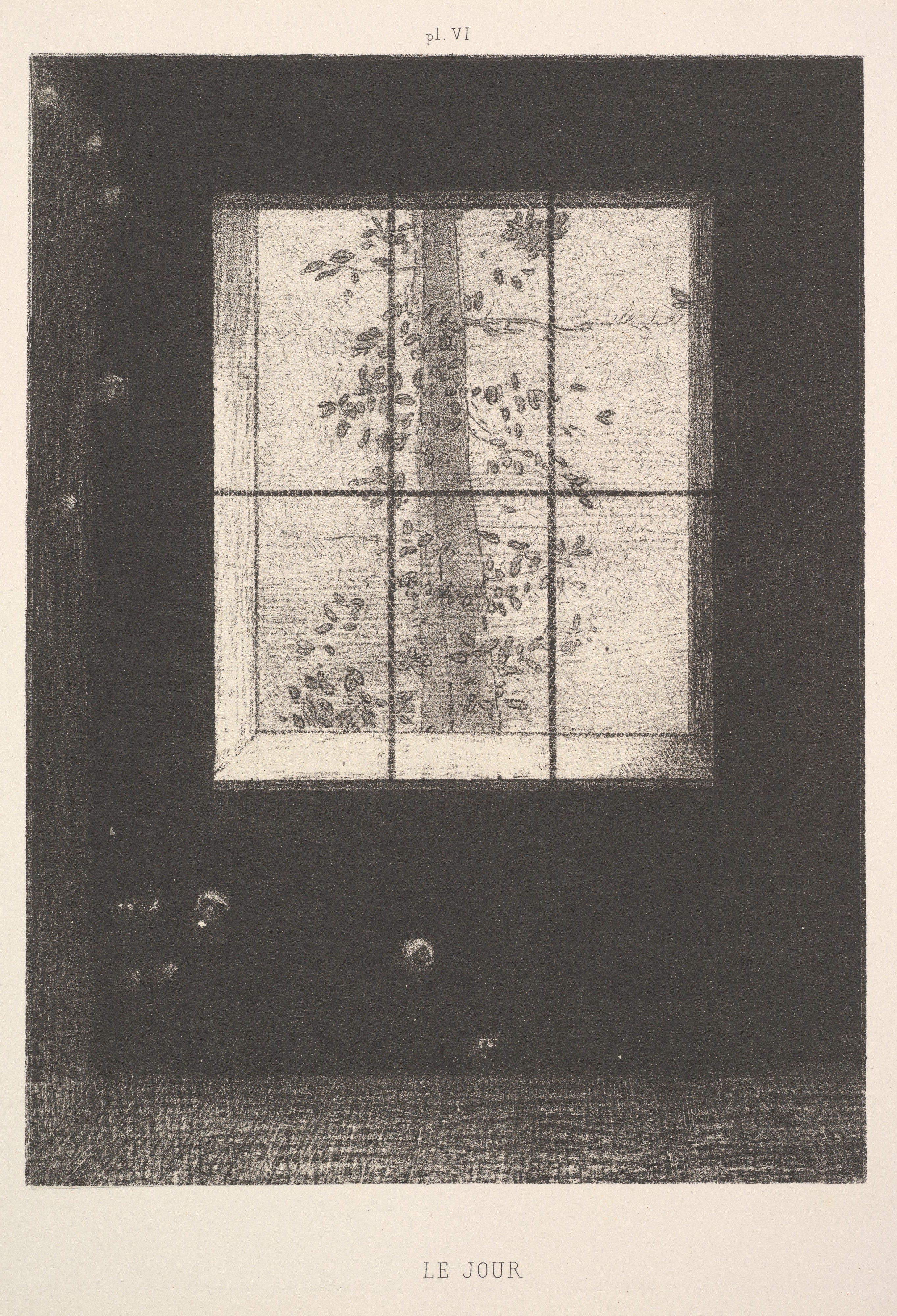
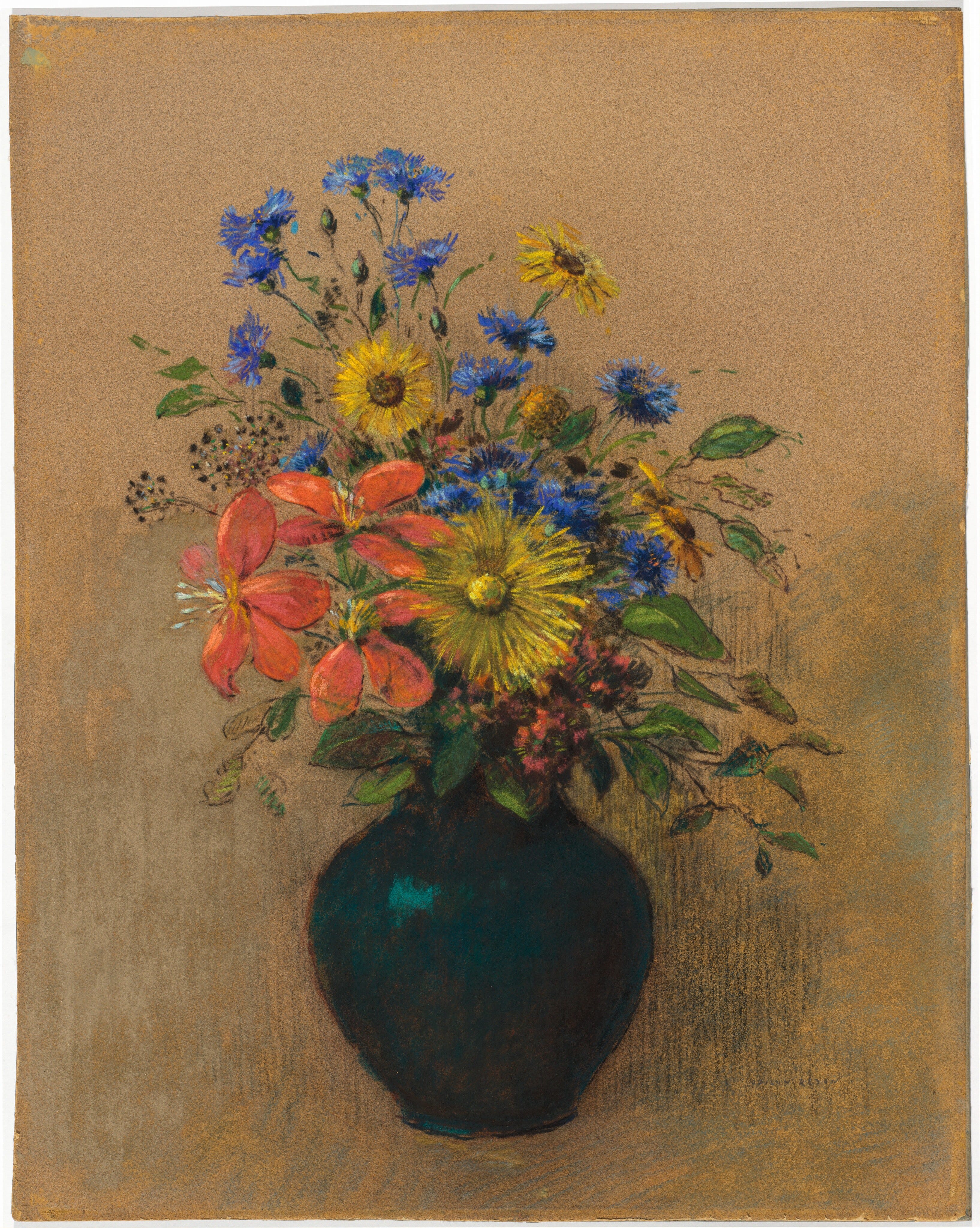
Odilon Redon was a French painter, Symbolist draftsman, and printmaker. Coincidentally, the Symbolist movement started with poetry. Fancy that. He fought in the Franco-Prussian war which means he directly fought my ancestors in 1870. Delightful. And here I am showcasing his work because it scratches at something that feels like your throat catching. I am in awe of its quiet haunting and adore his range of vibrant flowers and vases to eerie and absurd lithography. Its texture is undeniable and his style renders a longing of both the light and dark parts of life that I respect entirely. I implore you to click the hyperlinks in the captions of the prints above to see for yourself. My personal favorite is L’Oeuf (The Egg).